Ladies Market > Buying > Copies and Customs
Fake Market Hong Kong: Where the Copies Are, What They Cost, and What Customs Does
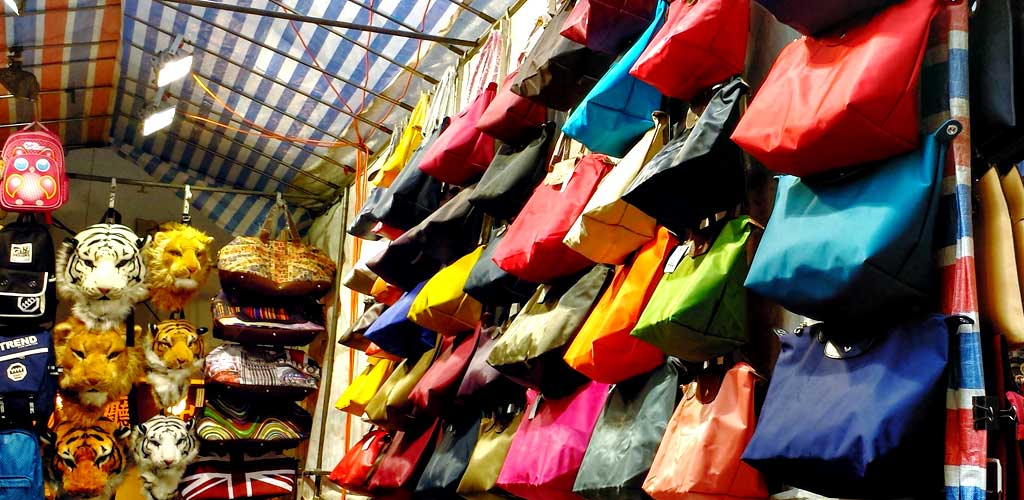
No street in Hong Kong announces itself as a fake market. The counterfeit trade sits inside two licensed hawker strips that sell everything else as well — Ladies Market on Tung Choi Street in Mong Kok, and the pitches on Temple Street in Yau Ma Tei — sold from the same fixed pitches, in the same trading hours, as socks and phone cases.
Both strips are enforced, repeatedly. Customs has raided counterfeit pitches on Tung Choi Street three times in the past year, and it raided pitches on both streets in September 2026. That record is the clearest answer to what is on the street today: stock kept off the pitch, and a trade that is still there to be raided.
Where it actually is: the two strips
The copy stock is not a separate market inside the market. It is on the fixed-pitch hawker stalls, which is what the Ladies Market stalls legally are: pitches licensed by the Food and Environmental Hygiene Department, set up and dismantled daily, with a licence window the department publishes.
| Strip | The market on it | Pitches and licensed hours | What Customs records there |
|---|---|---|---|
| Tung Choi Street, Mong Kok | Ladies Market, between Argyle Street and Dundas Street | 87 fixed pitches in four blocks, licensed 12:00–23:00 every day | 21 pitches plus an upstairs storage site, 20 November–4 December 2025; 19 pitches on 22 April 2026; 8 pitches on 8 September 2026 |
| Temple Street, Yau Ma Tei | Temple Street night market | Fixed pitches licensed to 23:00; the morning-set-up pitch type from 14:00 | 9 pitches on 3 September 2026 |
Pitch counts and hours: FEHD fixed-pitch hawker records, read 15 November 2026. Raids: Hong Kong Customs press releases of 5 December 2025, 23 April 2026 and 9 September 2026.
The two streets keep different clocks. Tung Choi Street is licensed from 12:00, so the market is a midday-to-late-evening street. The Temple Street pitches of the morning-set-up type are licensed from 14:00, which puts the whole of that market's day later.
What the seizures were made of tells you what the trade stocks. Across the three operations Customs listed handbags, leather goods, accessories, clothes and toys. The September operation was across both streets: 3,100 items with an estimated market value of about HK$1 million, and seven arrests — one man and six women aged 34 to 65.
What you will and will not find
You will find the goods mixed into ordinary stock, at the front of a pitch that also sells scarves or phone cases, with nothing marking it out. You will also find stock produced from somewhere other than the pitch: in the December 2025 operation Customs raided 21 pitches and a nearby upstairs storage site for counterfeit goods, which is where a stall keeps what it does not want on display.
What you will not find is a shop. The strip is licensed hawker pitches, not shop units: no brand storefront among them, no receipt with the brand printed on it, no box, dust bag or serial number you can check with the brand, and no return, exchange or warranty on anything bought at a pitch.
What it costs, and against what
A price on its own says nothing. What matters is the gap to a genuine article, priced at a named Hong Kong seller on a known date. A tote-sized handbag settles at HK$150–200 at the market after bargaining. The nearest thing a brand sells at that size, Longchamp's Le Pliage Original L tote, is HK$1,400 at Longchamp's own Hong Kong online boutique, read 15 November 2026 — roughly seven to nine times the market price.
| Item | Copy, at the market | Genuine, at a named Hong Kong seller | Gap |
|---|---|---|---|
| Handbag, tote size | HK$150–200 after bargaining, checked October 2026 | HK$1,400 — Longchamp Le Pliage Original L tote, Longchamp Hong Kong online boutique, read 15 November 2026 | about 7–9 times |
Brands publish their Hong Kong prices, so any quote you are given can be checked against the number the brand itself charges: a Longchamp Le Pliage Xtra M leather shoulder bag is HK$3,750 and the L is HK$6,100 at the same boutique on the same read date; a Pop Mart LABUBU Jazz figure is HK$235 at Pop Mart's own Hong Kong store, read 15 November 2026. Naming a brand here is a statement about its Hong Kong price, not about any pitch.
Customs' investigator said at the briefing on the September operation (RTHK, 9 September 2026) that the seized goods were selling for as low as a quarter of the cost of the genuine ones, and described a notable difference in quality. In law the test is the mark, not the price: what the ordinance catches is a forged trade mark applied to goods you are not licensed to use it on. A quarter of the price is not a discount on a bag. It is the price of a different object, with different leather, stitching and hardware, and those differences are visible in your hand. In the same briefing Customs described the fake plush toys it had seized: the wrong number of teeth, unevenly arranged, with glue and paint applied unevenly, and packaging that looked blurry and off colour against the real thing. Look at the teeth, the seams and the print on the box before you pay, and treat a story about factory overruns as a story.
The rest of the cost arrives after you pay. No receipt means no proof of purchase, no warranty, no exchange and no resale value; nothing can be serviced; and the first thing to fail is the hardware or the zip. That is the arithmetic on a HK$150 bag that looks like a HK$1,400 one.
What happens on the way home
Three different rules apply, and they are not the same rule. The Hong Kong one is about selling and about moving goods across a border. The one at your end of the flight is about what you are allowed to bring in, and it is decided by your own government.
The Hong Kong position, precisely
Under the Trade Descriptions Ordinance, any person who sells or possesses for sale goods with a forged trade mark commits an offence, and the maximum penalty on conviction is a fine of HK$500,000 and imprisonment for 5 years. Customs prints that sentence on every counterfeit release it issues, including the one of 9 September 2026.
A separate section covers movement across the border. Section 12 of the same ordinance (Cap. 362) provides that a person must not import or export goods to which a false trade description or forged trade mark is applied. It carries a defence where the person charged proves the goods are not intended for trade or business (section 12(2A)(b)), and it does not apply to goods in transit (section 12(3)). Latest version read 15 November 2026.
Read plainly: in Hong Kong the person at risk is the seller, and the trader holding stock for sale. A visitor carrying one bag for their own use is a different legal position from a trader with a rack of them, and the ordinance says so in terms. That is not the same as the bag being safe, because the decision that matters is taken at the other end of the flight, by a different government.
Your own country decides, and two publish the rule plainly
| Arriving in | What the authority says | Source and read date |
|---|---|---|
| United Kingdom | "If you bring goods suspected of infringing intellectual property rights ... they may be seized and you could be prosecuted." No quantity or value is set: the test is whether the goods infringe, not how many you carry. | GOV.UK, Bringing goods into the UK for personal use: banned and restricted goods, read 15 November 2026 |
| Australia | "Fake (counterfeit) goods including things like brand name or designer clothing, handbags, shoes, cosmetics, perfume and hair straighteners are not allowed." Penalties: "Lose your goods, prosecution and large financial penalties may apply." Exceptions: "None". | Australian Border Force, Can you bring it in: Miscellaneous (page updated 22 October 2026), read 15 November 2026 |
The Australian wording is the entry headed "Fake designer goods" on that page.
Note what the Australian entry does not have: an allowance. Its exceptions line is the single word "None", which is the clearest statement either authority makes. The UK rule is not phrased as a threshold either — the goods themselves are the test. GOV.UK's personal allowance is an allowance for goods you may bring in, not a permission for goods you may not.
Every other destination sets its own rule, and none of them is overridden by the fact that you bought the thing on a licensed pitch in Mong Kok. Look it up before you pack, not at the airport.
If you decide to carry it anyway
Declare it. The UK says such goods may be seized and you could be prosecuted; Australia says they are not allowed, with no exceptions. Paying duty at the desk does not change either answer. Posting it home is not a way around the rule — a parcel is an import, judged on the same test, with the added problem that you are not there to answer for it.
Reporting a counterfeit stall
Customs runs a 24-hour hotline on 182 8080, a crime-reporting email at [email protected] and an online report form at eform.cefs.gov.hk/form/ced002. All three appear in its counterfeit releases, most recently on 9 September 2026.
Questions people ask
Is there a fake market in Hong Kong?
Not a market of its own. The copy trade is on the fixed hawker pitches of Ladies Market on Tung Choi Street and on the Temple Street pitches in Yau Ma Tei, sold from stalls that also sell ordinary market goods. There is no separate venue, no entrance and no address for it.
How much is a fake bag?
A tote-sized handbag settles at HK$150–200 after bargaining at the market, against HK$1,400 for the genuine Longchamp Le Pliage Original L tote at Longchamp's Hong Kong boutique on 15 November 2026. Expect the first quote from a stall to open well above what it will take, as at every other pitch on the street.
Can I be arrested for buying one in Hong Kong?
The offences the ordinance creates sit on two sides: selling or possessing for sale, and importing or exporting. The September 2026 arrests were arrests for selling. Carrying one bag for your own use is a different position from holding stock for sale, and section 12(2A)(b) exists for exactly that distinction.
Will it be taken off me at home?
That depends on the country you land in. The UK says goods suspected of infringing intellectual property rights may be seized and you could be prosecuted. Australia lists counterfeit goods as not allowed, with no exceptions. Neither rule turns on how many you carry.
Can I post it home instead?
No. A parcel is an import and faces the same test as your suitcase, and a consignment that is stopped leaves you with no goods and no refund.
Where these figures come from
Enforcement, seizures, arrests, the penalty sentence and the hotline: Hong Kong Customs and Excise Department press releases of 9 September 2026 (nine Temple Street pitches and eight Tung Choi Street pitches, about 3,100 items worth about HK$1 million), 23 April 2026 (19 Tung Choi Street pitches) and 5 December 2025 (21 Tung Choi Street pitches and the upstairs storage site), all read 15 November 2026. The "quarter of the cost" figure and the description of the seized plush toys are from RTHK's report of the same briefing, 9 September 2026.
The Trade Descriptions Ordinance, Cap. 362, section 12 and subsections (2A) and (3): the text of Cap. 362 section 12 on HKLII, latest version 23 August 2026, read 15 November 2026.
Pitch counts and licensed hours: FEHD fixed-pitch hawker records, Tung Choi Street (four blocks totalling 87 pitches, 12:00–23:00) and the Temple Street hawker area plan (morning-set-up pitches from 14:00, cabinet pitches from 06:00, both to 23:00), read 15 November 2026.
Prices: HK$150–200 for a handbag is the after-bargaining figure on our Ladies Market price guide, checked against Hong Kong travel sources in October 2026. Genuine prices are the sellers' own: Longchamp's Hong Kong online boutique (Le Pliage Original L tote HK$1,400; Le Pliage Xtra M shoulder bag HK$3,750, L HK$6,100) and Pop Mart's Hong Kong store (LABUBU Jazz figure HK$235), both read 15 November 2026. Shop prices move; check one before you use it to argue a stall down.